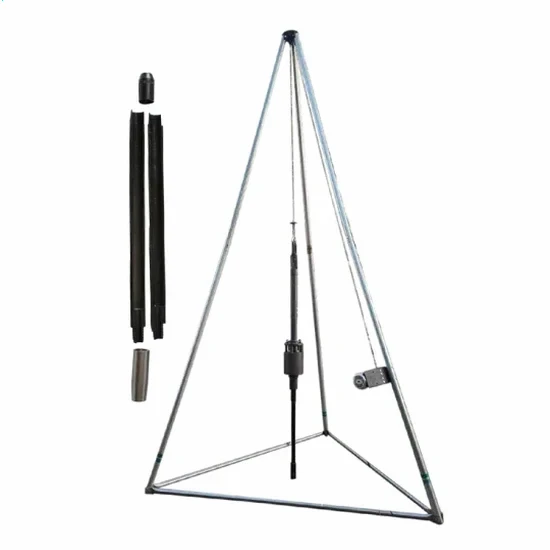
Levis grew along the high southern bank of the St. Lawrence, where the old shipbuilding yards gave way to dense residential neighborhoods and the expanding Desjardins commercial district. That rapid urbanization was built on a complex glacial legacy: stiff till overlying deep, sensitive Champlain Sea silts that can lose strength when disturbed. Every high-rise foundation and every bridge approach along Autoroute 20 has relied on the Standard Penetration Test to read that subsurface story. Our SPT work across Levis has taken us from the shale bedrock near the ferry terminal to the thick alluvial pockets in Saint-Romuald, and the triaxial testing that often follows helps confirm the strength parameters we first flag in the field. When the N-values start dropping sharply, we know exactly what that means for the next pile design.
In the Champlain Sea deposits beneath Levis, a single SPT interval with N=3 can change the entire foundation strategy.
Local ground factors
Much of central Levis sits on the Champlain Sea clays, a post-glacial marine deposit that is moderately overconsolidated near the surface but becomes normally consolidated and highly sensitive below about 10 meters. This sensitivity — where undisturbed clay can hold significant load but remolded clay flows like a viscous liquid — makes SPT interpretation critical because the dynamic insertion of the sampler partially remolds the material. If the driller advances too quickly or the hole is not kept full of drilling fluid, the blow counts can read artificially low, leading to an underestimation of the undrained shear strength. In the Saint-Joseph-de-la-Pointe sector, where the clay is interbedded with thin silt lenses, the SPT hammer energy can also be dampened by high pore pressures that dissipate slowly. We correlate every low N-value with pocket penetrometer tests and vane shear readings from the same hole, and for projects in the NBCC seismic category D, the SPT data feeds directly into the liquefaction screening that the code requires for fine-grained soils with plasticity indices below 20.
FAQ
How much does an SPT investigation cost for a typical house lot in Levis?
For a single-family residential lot in Levis, an SPT program with one to two boreholes to a depth of 12 to 15 meters typically falls in the range of CA$670 to CA$890 per borehole, including mobilization, drilling, sampling, N-value reporting, and a summary letter. The final figure depends on access, depth to refusal, and whether companion laboratory testing is requested.
How deep do you need to drill the SPT borehole in the Levis area?
Most borings in Levis continue until the sampler encounters the dense glacial till or the underlying shale bedrock, which often lies between 15 and 30 meters below grade. If the structure is tall or the Champlain clay is unusually thick — which happens in the former river channels near the Saint-Charles estuary — we may extend the hole to 35 meters or until N-values exceed 50 blows per 300 mm for three consecutive intervals.
What makes SPT interpretation different in the Champlain Sea clays compared to other soils?
The principal challenge is the sensitivity of the clay: the mechanical disturbance from driving the split spoon can temporarily remold the soil and produce N-values that underrepresent the in-situ strength. We compensate by measuring the actual hammer energy, checking the sampler recovery ratio, and cross-referencing with field vane tests or CPT soundings. The NBCC also requires a careful assessment of the clay's plasticity index before ruling out liquefaction potential, so the SPT data always gets interpreted together with Atterberg limits from the same samples.