← Home · Foundations

Shallow Foundation Design in Levis, QC – Geotechnical Analysis for Footings and Mats

Together, we solve the challenges of tomorrow.

LEARN MORE →

In Levis, the soil profile changes fast. One lot sits on dense till, the next hits soft Champlain Sea clay at 2 meters. That contrast catches a lot of builders off guard. Shallow foundation design here is never a copy-paste job. Our team starts with the stratigraphy, then runs bearing capacity and settlement checks against the actual ground conditions. The St. Lawrence River terrace deposits run through much of the city, and the water table can be high in spring. Before sizing footings, we often recommend a plate load test to verify modulus of subgrade reaction on compacted fill, or an SPT drilling program when the overburden exceeds 4 meters. With the 2020 NBCC and CSA A23.3 as our baseline, every design we deliver accounts for frost depth, seismic demand, and the real soil behavior we measure on site.

Good shallow foundation design in Levis starts with knowing what's under the frost line, not just the bearing pressure.

Process and scope

A common mistake we see in Levis is contractors treating the whole south shore as uniform till. It isn't. The post-glacial sediments vary from stiff silty clay near the escarpment to loose sand lenses that can settle differentially under load. Shallow foundation design has to account for these transitions. We calculate ultimate and allowable bearing capacity using limit equilibrium and deformation-based methods, always cross-checked with field data. We also run sensitivity checks on soil variability. If the client is placing fill, we integrate sand cone density verification to confirm compaction before foundation concrete is poured. The goal is a design that holds its assumptions once the excavator bucket hits the subgrade.
Shallow Foundation Design in Levis, QC – Geotechnical Analysis for Footings and Mats
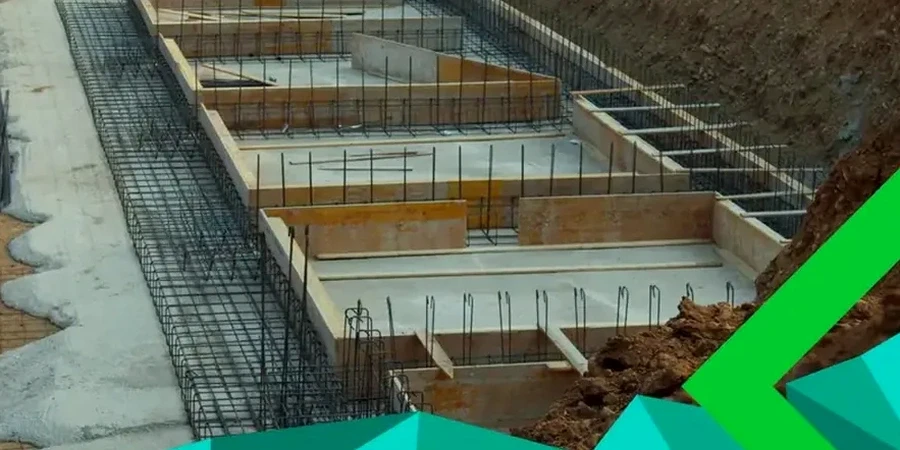
Technical reference image — Levis

Local ground factors

Levis sits at roughly 100 meters elevation on the south shore, with the Chaudière River cutting through to the north. The 2020 National Building Code places the region in a moderate-to-high seismic zone. Shallow foundations on soft clay here face a real liquefaction risk if the water table is within 3 meters of the base. Differential settlement is the other silent problem — we've seen structures with 40 mm of uneven movement across 8 meters because the designer ignored a sand lens. Frost heave is equally aggressive. Without proper depth and granular drainage, a footing can lift 20 mm in one winter and crack the slab above. Our approach includes site-specific seismic site classification and, when needed, a liquefaction assessment to quantify the post-shaking bearing loss. We don't guess. We run the numbers.

Need a geotechnical assessment?

Reply within 24h.

Email: info@geotechnical-engineering.org

Technical data

ParameterTypical value
Typical frost depth (Levis area)1.5 – 1.8 m
Allowable bearing pressure (dense till)150 – 300 kPa
Allowable bearing pressure (stiff clay)75 – 150 kPa
Seismic design category (NBCC 2020)Site Class C to E dependent
Minimum footing width (residential)600 mm (per NBCC 9.15)
Minimum footing depth (heated structure)1.2 m below grade
Typical settlement limit (total)25 mm for conventional footings
Differential settlement limit1/500 span (masonry structures)

Related services

01

Bearing capacity and settlement analysis

Limit equilibrium and deformation-based calculations for strip, pad, and mat foundations in Levis soils, including layered stratigraphy and water table effects.

02

Frost protection design

Foundation depth and insulation detailing for the Chaudière-Appalaches frost zone, compliant with NBCC 2020 and CSA standards.

03

Seismic foundation checks

Site class determination, bearing capacity reduction under seismic loading, and liquefaction screening for shallow foundations on saturated granular soils.

04

Field verification and QA

Subgrade inspection, plate load testing, and density control during construction to confirm design assumptions are met on site.

Applicable standards

NBCC 2020 – National Building Code of Canada, Division B, Part 4 and Part 9, CSA A23.3:2019 – Design of Concrete Structures, ASTM D1194 / D1195 – Plate Load Test (field verification of bearing capacity), CAN/CSA-S6:19 – Canadian Highway Bridge Design Code (for transportation structures), ASTM D2487 – Unified Soil Classification System (soil description and identification)

Frequently asked questions

What is the typical cost for a shallow foundation design in Levis?

For a standard residential or light commercial project, shallow foundation design in Levis typically falls between CA$2,870 and CA$4,560. The final figure depends on the number of borings required, the complexity of the soil profile, and whether additional field testing like plate load or density tests is included.

How deep do footings need to be in Levis to avoid frost heave?

The NBCC 2020 requires a minimum footing depth of 1.2 meters below finished grade for heated structures in the Levis area, with a design frost depth typically taken as 1.8 meters for unheated or perimeter conditions. We specify granular backfill and drainage to cut off capillary rise, which is often more critical than depth alone.

Can you design a mat foundation on the Champlain Sea clay found in Levis?

Yes. We model the clay's consolidation and undrained shear strength parameters from lab triaxial data, then run settlement and bearing checks for the mat footprint. The key is controlling differential settlement, and we often recommend a structural fill replacement layer when the clay is soft within the upper 2 meters.

Do you need a site investigation before designing a shallow foundation?

Absolutely. Without a proper geotechnical investigation, foundation design is just guesswork. We start with SPT borings or test pits to log the stratigraphy, recover samples for lab testing, and install piezometers if the water table is high. The NBCC requires a geotechnical report for all Part 4 designs, and we won't stamp anything without field data.
Location and service area

We serve projects in Levis and surrounding areas.

View larger map