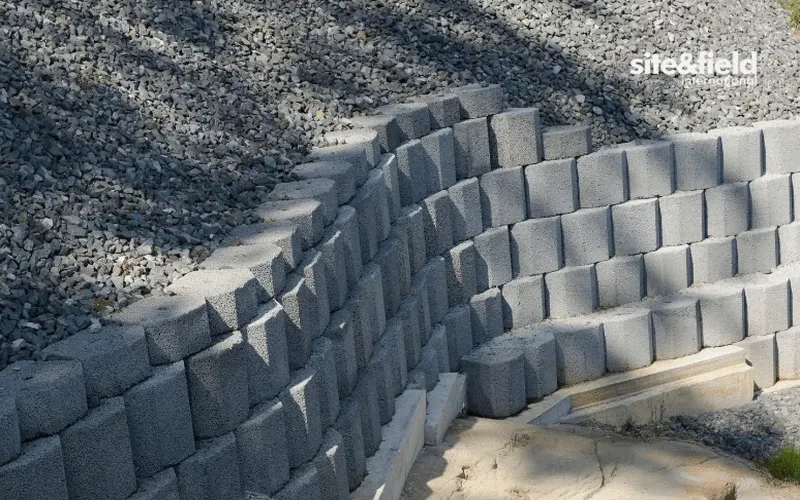
Levis sits on a commanding bluff overlooking the St. Lawrence River, a location that defines its history but also creates constant geotechnical pressure. The steep escarpment that gave the city its strategic defensive advantage now demands precise retaining wall design for any construction near the slope crest. Soil conditions here shift dramatically. You encounter marine clay deposits from the Champlain Sea era, interspersed with glacial till and shale bedrock. A generic wall section won't work. The river-facing slopes require careful analysis of lateral earth pressure and global stability. Before setting foundation elevations, many engineers cross-reference data from a CPT test to map the clay sensitivity and locate the refusal depth on the shale. This stratification directly controls the wall's heel length and the need for subdrainage behind the stem.
A retaining wall on Levis clay without a proper heel drain is just a temporary structure waiting for the first spring thaw.
FAQ
What is the typical cost range for a retaining wall design in Levis?
The engineering design fee for a residential retaining wall in Levis typically ranges from CA$1,460 to CA$5,850. The final cost depends on the wall height, the complexity of the slope geometry, and whether a full global stability analysis is required by the city permit office.
How deep do footings need to be for a Levis retaining wall?
The footing base must extend below the frost penetration depth, which we design for 1.8 meters in Levis. The exact depth also depends on the bearing stratum. If clay is present, we may need to key the footing into the underlying till or shale to achieve the required bearing resistance.
Do I need a building permit for a retaining wall in Levis?
Yes. The Ville de Levis requires a permit for any retaining wall taller than 1.2 meters, or shorter walls supporting a surcharge like a driveway. The application must include drawings sealed by an engineer registered with the Ordre des ingénieurs du Québec.
What is the best backfill material for a wall in Quebec clay?
We specify a free-draining granular backfill, typically a clean crushed stone like 20 mm net. We always include a filter fabric separation layer between the granular backfill and the native clay to prevent fines migration, plus a continuous 100 mm diameter perforated toe drain connected to a positive outlet.